

Productivity
April 18, 2026
3 min read
The Coffee Shop Sound Paradox
Coffee shops are loud, chaotic, and full of distractions. So why do so many people focus better there than in silence? The answer isn't what you think.
Read More
Insights, tips, and strategies to help you master focus and boost your productivity
Coffee shops are loud, chaotic, and full of distractions. So why do so many people focus better there than in silence? The answer isn't what you think.

Your team needs you available. Deep Focus blocks everything. How do you balance focus with collaboration? Here's the system that works.

Freedom covers every device you own, including your phone. Deep Focus goes deeper on one device and structures the work instead of only walling it off. The choice comes down to which screen is actually beating you, and here is how to tell.

Concentration behaves like a trainable capacity, but almost nobody trains it the way they would train anything else. They start above their ceiling, treat every break as recovery when it isn't, and quit on the first bad day. Here is a four week progression that accounts for all three.

Hours are easy to count and tell you almost nothing about knowledge work. Here is why the number degrades the moment you start aiming at it, where hour tracking is still the correct tool, and what to measure about your own work instead.

Most weekly reviews decay into inbox triage within a month. You tidy, you feel organised, and nothing about the following week is different. Here is how to run one that produces a lesson instead of a tidy folder, why the calendar is the most informative thing to look at, and why the fix for a dying review is making it shorter.

If every attempt to work feels like self-coercion, adding more force usually makes the next attempt harder rather than easier. Here is how to tell a focus problem from a motivation problem from a meaning problem, and what to do when the honest answer is that none of them is really the issue.

Six hours at your desk is not six hours of studying, and rereading your notes is not studying at all. Here is a study system built on retrieval, spacing and a laptop that stops working against you.

AI chat is the first distraction that feels exactly like work, which is why almost nobody audits it. Here are the five specific ways an assistant eats a work session, and the countermeasures that keep it a tool rather than somewhere you go when the task gets uncomfortable.
Almost every piece of focus advice assumes you control your own time. With children at home you do not, and the honest problem is not willpower but the shape of the time you get: short, fragmented, and unpredictable. Here is what actually works inside that constraint, including what to do when the window collapses.

A blacklist asks you to predict every distraction in advance. A whitelist inverts the burden of proof so unknown distractions are covered by default. Both have real costs. Here is how to pick per task, and why most people end up running both.
Everyone eventually defeats their own blocker, and it is a design problem rather than a character flaw. Here is what locking Task Manager and Terminal actually achieves, why no app can make bypass impossible, and how to pick a strictness level that you will still be using in a month.
You block Twitter, Reddit, YouTube. You feel productive for an hour. Then you find yourself reading Wikipedia articles, reorganizing your desktop, or staring at your email inbox. Blocking apps is step one. Here's step two.

ADHD isn't a shortage of attention or discipline. It's an impairment of executive function, which is why "just focus" and "try harder" reliably fail. Here's what to build instead, based on how the ADHD brain actually regulates itself.

You tell yourself it'll take five seconds. Just a quick glance at Slack. One scroll through Twitter. But twenty minutes later, you're still there, and you've forgotten what you were working on.
A to-do list records what you intend to do. It records nothing about when you will do it or what state you need to be in, which are the two things that actually decide whether it happens. Here is the mechanism behind the failure, and the workflow that replaces it without pretending lists are useless.

Most Sunday resets are performed rather than functional. An hour of tidying and colour coding produces a strong feeling of control, and then Monday arrives and the plan is irrelevant by eleven. Here is a weekly planning ritual built to survive the week, plus the stripped down version for people whose week is not theirs to plan.

The quality of a focus block is mostly decided by the break before it. That is why a ten minute scroll leaves you less restored than a five minute walk, why the popular work to break ratios deserve more suspicion than they get, and how to find the break length your own work actually needs.

Flow is not a mood you summon by wanting it badly enough. It happens when a few specific conditions line up, and most of them you can build on purpose. Here is what each condition does mechanically, how to engineer it, and why flow is oversold.
An office does a lot of quiet work for your concentration that you never get billed for: the commute, the other people, the room that means work. Remote work removes all of it at once and most of us try to replace it with willpower. Here is what to rebuild instead, including the boundary problem nobody talks about.

These get compared as rivals, but they fix different failures. RescueTime measures where your time went. Focusmate gets you started. Deep Focus keeps you on task once you are. Here is how to tell which failure is actually yours, and where each tool loses.
The cost of a notification is not the interruption. It is the anticipation, because a device that might buzz occupies you continuously. Here is a staged protocol for turning them off, re-adding only what earns it, and handling the objection that people expect fast replies.
You don't need more motivation. You need a system that runs whether you feel like it or not. Here's how to build a morning routine that protects your best hours, automatically.

Switching tasks is not free, and the bill never arrives as a line item. It arrives as a day that was fully occupied and produced nothing you would point at. Here is what a switch actually costs, why creative work pays more than its share, and how to restructure a week so the charge stops landing forty times a day.

You're working from home, Slack is pinging, your browser has 47 tabs open, and you've rewritten the same paragraph three times. Remote work promised freedom. Instead it gave us infinite distraction. Here's how three blocking apps stack up.

I spent a week not touching my phone until 12 PM. No email, no Slack, no scrolling. Just mornings that belonged to me. Here's what happened, and why I'm never going back.
You know it's bad for you. You know you'll feel worse after. And yet you keep scrolling. This isn't about willpower. It's about pain, and the ways we've learned to numb it.

Most deep work advice quietly assumes a job where nobody urgently needs you. Founders do not have that job. Here is how I protect building time without pretending the reactive half of the work is optional, and what it costs when I get the balance wrong.

A second browser carries its own tabs, history and logins, so it cannot autocomplete you into a distraction or show you the thing you abandoned on Tuesday. It costs nothing, it works without any blocking software, and it has one honest limit worth knowing before you try it.
You block distractions, start a focus session, and then realize you need to open Notion. Or Figma. Or that one Google Doc. So you unlock everything, open the app, and lose 10 minutes to tab-switching. Quick Actions fix this.
Writing a thesis is less like climbing a mountain and more like dragging yourself through mud for six months. Here's how I built a system that kept me sane, and actually got me to the finish line.

You close Slack and open your editor, but part of your attention is still back in that thread. That is attention residue, a named effect from Sophie Leroy's research, and it explains why a two minute interruption costs far more than two minutes.

Grad school is the last place where deep, sustained thinking is both expected and completely unsupported by the environment. A practical guide to doing serious intellectual work in conditions that weren't designed for it.
There is no single best blocker, and anyone telling you otherwise is selling one. What there is: four criteria that actually decide the outcome, and five tools that each win clearly for a different person. Here is how to match yourself to one.
Deep work isn't just a productivity strategy. It's a specific neurological mode with measurable effects on memory, creativity, and cognitive performance. Here's what the science says about what happens when you actually focus.

Motivation is unreliable by design. It's an emotional state, and emotional states are not a scheduling mechanism. The people who do consistent, high-quality work over years aren't more motivated. They've built better rituals.

Most people install a blocker, add Reddit and Twitter, and conclude a week later that blockers do not work. The configuration was the problem. Here is how to build a profile from the task backwards, including what to do about the tools that are both essential and distracting, and the mistake that kills most setups.

The people who burn out hardest are not always the ones working the most hours. They are the ones who never fully stop. Here is what burnout actually is, how to tell it apart from ordinary tiredness and from depression, and what recovery has to include to work.
The colors are not marketing. They describe exactly how a sound's energy is spread across the frequency range, which is why one hisses and one rumbles. Here is what each one is, what the research honestly supports, and how to pick the right one for the work in front of you.

I spent three years on a first draft that could have taken eight months. Not because I lacked discipline, but because I kept optimizing the wrong thing. Here's the workflow that finally moved the needle.
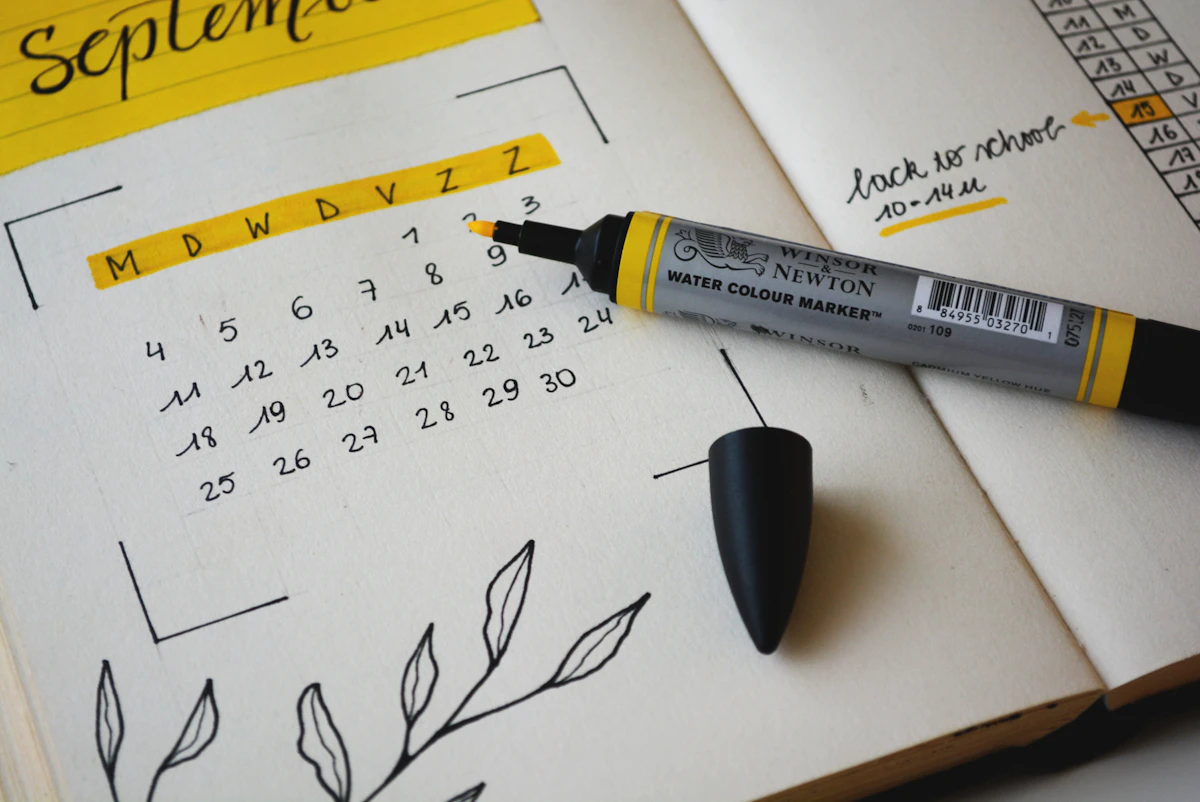
I used to plan my day as a to-do list. Then I started planning it as a sequence of timed environments, and the difference was bigger than I expected. A deep dive into how block-based planning actually works.

Every app designed to hold your attention was built by a team of engineers whose job was to keep you there as long as possible. Understanding what you're up against is the first step to getting out.

You don't have a discipline problem. You have a design problem. Here's why relying on willpower to avoid Instagram is a losing game, and the much cheaper fix that actually works.

Doomscrolling is not a discipline failure. It is a way of managing a feeling you did not want to have, and it works just well enough to keep happening. Here is what is underneath it, why deleting the app usually fails, and the interventions that hold up.
Every AI on earth wants to keep you chatting. Brainy is the first one designed to send you back to work. Meet the built-in, focus-aware AI assistant inside Deep Focus.

A realistic, un-hyped account of what happens when you commit to 30 straight days of protected focus sessions. No "life-changing" clichés, just the small, concrete shifts that show up in week one, week two, and week four.
The hardest part of any focus habit isn't the focus. It's the *starting*. Here's why the Weekly Scheduler is the single most underrated feature in Deep Focus, and how to set one up in under five minutes.

Nobody warns you that working from home is a full-time battle against your own kitchen, your dog, and the internet. Here's the exact Deep Focus setup I use to make a home office feel like an actual office.
Five classes, two lab reports a week, and a phone that wouldn't shut up. Here's the exact system I used to survive, and the tiny Deep Focus setup that did most of the heavy lifting.

Stop measuring work in hours at the desk. Start measuring it in undistracted minutes. A tactical guide to using Deep Focus's Session Planner to build a day where four hours of real work replace ten hours of noise.

Cold Turkey can lock you out of your own computer. Forest just kills a cartoon tree. Both work, for different people, and picking wrong is the reason most focus apps get uninstalled. Here is how to find the amount of force your failure mode actually needs.

Why the quietest productivity hack is also the most overlooked. A short tour through the science, and psychology, of ambient sound, and why Deep Focus bundles 10 of them natively.

Most “study hacks” don't survive real life. They collapse under distraction. The real secret isn't motivation; it's designing systems that protect your focus automatically.

The 25 minute interval came from a kitchen timer shaped like a tomato, not from research into human attention. It is a decent default and a terrible commandment. Here is what actually makes the technique work, where it quietly costs you, and how to run a variable-length system without losing the parts that were doing the job.

There's a kind of tiredness that sleep can't fix. The one that comes from noise that never ends. Peace doesn't mean escaping life; it means designing moments where your mind can finally breathe.

You open your laptop to work for "just 10 minutes." Two hours later, you've read headlines, scrolled feeds, and forgotten what you even meant to do. That invisible tax - the cost of switching - is slowly erasing your attention span.
Get the latest productivity tips and Deep Focus updates delivered to your inbox